Saturday, October 7, 2023

Dawn of the Dead (George A. Romero, 1978)

Three movies I first encountered as a kid have stayed with me as perennial favorites, my love for them never diminishing or fading, even after dozens of rewatches from childhood to middle age, even after my tastes developed and expanded (or in some cases regressed). These movies helped shape my personality and worldview, and scenes from all three often flash into my brain even when I'm concentrating on other things, causing me to bliss out for a few seconds and think, "Man, I love that movie." All three have retained their power and pleasure, and each return visit contains the thrill of that first watch. Two of those movies are Fast Times at Ridgemont High and Pee-Wee's Big Adventure (I'll never get over Paul Reubens' death). The third one and the bleakest in the bunch (with a sliver of optimism) is, of course, Dawn of the Dead. (I would have included The Wizard of Oz in this group, but my experience with that movie feels like more of a universal or at least national experience, and Oz doesn't feel as inextricably linked to my identity as the other three.)
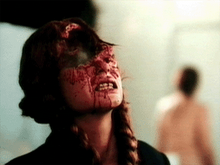
My childhood love of horror was frequently stymied by my mother's extreme strictness when it came to splatter movies and R-rated movies in general (she was pretty relaxed about most other things). Though my parents and I had watched Night of the Living Dead together when I was 11 (and my mother had memories of defying her own mother's disapproval to see the movie at the drive-in on its initial release), my mom shut down my initial Dawn of the Dead viewing later that same year. I knew from Fangoria and various other horror publications that the decade-later sequel to Night was a much bloodier and gorier experience, so I waited until my parents went to bed to pop in the VHS. I was a night owl with morning person parents, so I figured they'd be asleep by the time the bloody stuff ensued. My mother's ill-timed visit to the bathroom during the film's second scene in the apartment building ended my fun. Seeing the carnage on display (in probably the film's most violent scene), she decided my still-developing pre-teen brain shouldn't witness such scenes and made me stop watching. A small part of me has never forgiven her. (I don't have kids of my own, but if I did, they'd probably be in therapy from watching Texas Chain Saw Massacre at age four. I think we should all be exposed to the horrors of life, and the movie masterpieces about those horrors, from the beginning. I'm not watching Frozen for the 80th time. My imaginary kids are watching the good shit, whether they like it or not.)
I got some delayed cinematic justice the following summer. I was 12 and friendly with a new kid whose parents owned my small hometown's only video store. He could borrow whatever he wanted from the store for free and shared my love of horror, so I spent the summer checking all kinds of banned-by-mom video nasties off the bucket list at his place. Dawn of the Dead was top of that list. From the moment the movie began, I felt a warm, buzzy joy that never let up until the closing credits, just like when I watched Fast Times and Pee-Wee.
Dawn of the Dead felt like I'd asked some all-powerful being to create something just for me, and that freaky being had delivered the damn goods. It was gritty, it was intense, it was fun, it was pessimistic but not defeatist, it was funny, it was splattery, it was smart, it was dumb (zombies getting hit with pies!!), it was unpredictable while still delivering what you wanted and expected, it showed me what a movie made by a real filmmaker with a real personality and point of view looked like (I didn't realize at the time how important it was that Romero was the editor and the director), and it poured wildly unsafe levels of flammable material on the torch I carried for movies. I can't be objective about Dawn of the Dead. I think it's one of the all-time greats and one of Romero's masterpieces in a career with hardly any duds.
I love how the film begins, with the head and shoulders of Gaylen Ross resting against the red '70s shag. She's taking a little rest, but there's something unsettling and uneasy about the image. After the title scrolls up, we're almost immediately thrust into the chaos and tumult of a TV news studio in disarray. Something disastrous has happened and there's much argument and confusion about how it should be covered. It was a baffling opening scene for me as a kid. I'd never seen a movie begin mid-action before without any explanation or character-building or geographical establishing shots, but I was engrossed anyway. It's such a strong, disarming way to start the film, and Romero shoots it powerfully and confidently. He also appears in the scene with his then-wife and frequent collaborator Christine Forrest in one of his two cameos (the other being one of the biker dudes near the film's end).
The second scene at the apartment building (the one that made my mom 86 the proceedings with a 23 skidoo) was even more confusing but strangely compelling. Who were these guys? Cops? The military? Some kind of special secret forces organization? Why were they shooting people and zombies? Why were some of the apartment residents shooting at them? I was a sixth-grade rube from the sticks. This didn't jibe with the black-and-white world I'd been sold, but I rolled with it. On that first full viewing a year later, I was a teeny bit more sophisticated and had more context, but I was just as compelled. By the time our four leads made it to the mall, I was convinced I was watching my new favorite movie. And I was right.
Speaking of the mall, I get so irritated when people make snarky comments about how the scenes of the zombies wandering the mall are an obvious anti-consumerist visual metaphor, as if that somehow makes the movie not as good as its reputation. A) That's not all it is. B) Saying it out loud and seeing it in action are two different things. C) The mall is one of the four best movie locations, alongside trains, movie theaters, and bodies of water. Why not have zombies in the mall? D) Who gives a fuck?
To look at the movie and see nothing in the subtext of those scenes but that the average American human is a mindless consumer is missing the empathy that exists in Romero alongside the anger and the disappointment, not to mention the humor. There's a real loneliness in those images that's more powerful than the political critique. As the '70s creeped toward the '80s, the importance of community in mainstream American life continued to devalue compared to the wants and needs of the individual (a change that was supercharged and accelerated by the Reagan administration a few years later). What better visual intersection of loneliness, community, selfishness, individuality, aspiration, and desperation than the paradoxical space of a mall?
Just as importantly, it provides a fantastically varied visual space for the crazed slapstick of zombies stumbling around, on, or through escalators, stairwells, fountains, blood pressure machines, and sporting goods stores, getting knocked around and thrown off railings by our human characters, and, in one particularly wild scene, getting hit in the face with a series of pies by a bunch of mercenary bikers?This is cinema, baby.
Despite opening mid-action and continuing tensely and relentlessly from there, Romero finds time for quiet moments full of character detail and some hauntingly beautiful shots of the landscape. This is a poetic movie, in spite of (and sometimes because of) all the hacking, slashing, shooting, and smooshing. Like most of Romero's movies, it's also a keenly observant one about life in this country, and the ending is simultaneously hopeful, uncertain, pragmatic, and ambiguous.
Long before modern directors wouldn't stop congratulating themselves for hiring diverse casts in their aesthetically same-old, same-old Hollywood slop (I'm a catty little bitch today), Romero put together casts of characters that look like how the United States really looks demographically. There are a lot of interesting shifting power dynamics going on with our four leads (Ross, Ken Foree, David Emge, Scott H. Reiniger) as the movie progresses in addition to their camaraderie and teamwork, and Dawn of the Dead has a lot of subtly intriguing scenes about the divisions of race, gender, masculinity and femininity, disability, illness, and class without any characters making corny speeches to get any of this across. It continually flavors the movie instead of getting in the way of the movie. Aside from a handful of mildly overwritten one-liners, Romero's characters speak the way people speak, a strength that carries across most of his work.
I could keep going on and on about this movie (I didn't even mention the Hare Krishna zombie or Tom Savini's double duty as makeup and effects guy and actor), but I'll reel it in. Most of you have seen this one (probably multiple times), and you share my love for it. The naysayers? To paraphrase Kris Kristofferson, if you don't like Dawn of the Dead, you can kiss my ass.

Saturday, September 23, 2023

The Cat and the Canary (Elliott Nugent, 1939)

I've posted reviews of horror movies (and the occasional splattery action movie, western, sci-fi movie, suspense thriller, and underground/gross-out comedy) on this site since 2007, but this week we have a first — a Bob Hope movie. No, I'm not talking about Fancy Pants, friends. I'm talking about the fourth filmed adaptation of the hit horror/comedy play The Cat and the Canary. I reviewed the first adaptation, from German Expressionist master Paul Leni, back in 2016. Check it out here.
Hollywood pro Elliott Nugent closely follows Leni's template, and both movies are well-paced and successful at keeping the horror and comedy elements from stepping on each other. Nugent is a craftsman where Leni was an artist with vision, and the former's Expressionist style has been replaced with a slicker classic Hollywood look, but both visual approaches work well with the material.
Otherwise following the story closely (though changing most of the character's names), Nugent's version makes a couple of big changes to Leni's film and the play. The setting has been moved from a large Gothic castle in New York near the Hudson River to a hidden old mansion in the Louisiana bayou near New Orleans. The film also reduces the time between the death of Cyrus West and the reading of his will from twenty years to ten. This makes a bit more sense, considering most of the relatives are so young.
To recap the story, eccentric millionaire Cyrus West lived a life of family-avoiding isolation in the bayou, sharing the home with his housekeeper Miss Lu (Gale Sondergaard) and her black cat. His will, drawn by his attorney Crosby (George Zucco), stipulates that his living relatives must journey to his bayou home on the tenth anniversary of his death to hear the reading. Miss Lu is allowed to remain in the home for that decade.
On that auspicious date, the mostly distant relatives make the trek by Native American-guided canoe through the alligator-filled swamp. The survivors include elderly Aunt Susan (Elizabeth Patterson), middle-aged Cicily (Nydia Westman), and four young people, the hotheaded Fred (John Beal), the unctuous Charlie (Douglass Montgomery), the lovely Joyce (Paulette Goddard), and theater actor and radio star Wally (Bob Hope). I'm very unclear about bloodlines and who's related to who (and how), especially because all three young men want to get with Joyce. Charlie even used to date her and wants to get back together, which enrages Fred, who was already pissed off from the jump. Fred and Charlie are both suspicious of Wally, but Wally has the edge on both of them by simply not being a creep. Aren't you all related to each other? What gives? (The silent film did a much better job of noting how distantly removed the relations were.)
Guests assembled, Crosby opens the first of two envelopes (three, if you count the hidden envelope later in the film). Joyce inherits the entire fortune, but there's a catch. She must stay alive and maintain her sanity for thirty days, or the fortune and estate go to a different relative, concealed in the second envelope. A few of the others point out the incentive this gives them to kill Joyce or attempt to make her insane.
In the midst of all this hubbub, someone fires shots outside. The mysterious armed man comes to the door and announces himself as a guard at the nearby mental institution. A violent inmate has escaped. Nicknamed The Cat, this escapee is a murderer with shaggy hair and long gnarled fingers with long fingernails who crawls like a cat when he's about to attack. (His fellow prisoners really need more imagination when coming up with nicknames.) He's been spotted near the mansion. Meanwhile, Miss Lu is lurking about, acting strangely, and delivering cryptic pronouncements. The stage is set for mirth, murder, mayhem, family drama, and comic hijinks.
Hope, Patterson, and Westman deliver the comic relief in between the drama and the scares (there's a running gag where Westman stops screaming if you put a finger under her nose). I've never been a big Bob Hope fan, but I am a big Albert Brooks fan, and I was delighted to see some seeds of Brooks' delivery and timing in what Hope does in this film. Nothing here is knee-slappingly funny, but the humor is brisk and pleasant and doesn't wear out its welcome, and Hope and Goddard have real chemistry (so much so that they were teamed up for another horror/comedy, The Ghost Breakers, the following year).
The horror elements are handled effectively. Even though I knew most of what was coming, having seen the 1927 film, I was still excited by the dark twists and turns and their execution. Nugent captures an atmosphere of real dread, despite all the comedic biz, and the finale is genuinely creepy.
I don't have a lot of fancy-pants analysis to deliver this time. This is a solid Hollywood movie, well-made and skillfully performed, and I had a good time. It had been long enough since my viewing of the silent version that I was able to kick back and relax into this one without it feeling repetitive. I give this version three cats and two and a half canaries. Nugent is no Paul Leni, but he knows how to make a quality movie.