Saturday, April 18, 2026

The Devil's Wedding Night (Luigi Batzella & Joe D'Amato, 1973)

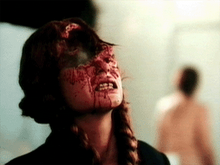
Though the title's a bit of a misnomer (this is a vampire movie), The Devil's Wedding Night is an entertainingly campy bit of Gothic horror, despite the second half having too many pad-the-running-time scenes of characters wandering confusedly through a castle in the dark. Those scenes aside, we get some hilariously arch dialogue, knowingly heightened performances, one of those great scenes in an old-timey inn/tavern where the locals get weird when the out-of-towner says he's going to the spooky castle (I never get tired of that), blood, copious nudity, an amulet vs. ring accoutrement showdown, a Pazuzu namedrop (shoutout to Pazuzu and my fellow Exorcist II defenders), and lots of vampire action. It's a reasonably good '70s b-movie time.
The movie begins with playboy archeologist Karl (Mark Damon, in one of his final roles before he became a big-shot movie producer) in his cozy library/study, researching the existence of the Nibelungen in the ancient tomes. He's convinced the ring is is real, has been used by a succession of historical figures (Alexander the Great, Genghis Khan, etc.) to control the world, and is most likely somewhere in the Carpathian Mountains in Transylvania at present. He impulsively decides to find it, seize it, and put it on permanent display at an archeological museum, where it will be free from the hands of men. This begs the question, if the ring is so powerful, wouldn't there be constant attempts to steal it from the museum? Maybe put it in a safe and bury it in a secret location?
Karl's twin brother Franz (also played by Damon) enters the study and begins razzing Karl with some poetry from hot new talent Edgar Allan Poe. Franz doubts the ring is real, but if it is, he thinks Karl should make some money off of it instead of donating it to a museum. He's also mildly concerned about Karl's impending journey to Transylvania, especially when Karl tells him he's going to Castle Dracula. Just in case vampires are real, Franz gives Karl an amulet that wards off their power and says he'll make the trip, too, if Karl gets in any trouble. Why does he have that amulet? These are some strange dudes.
Karl makes the long trip to Transylvania on horseback, where he fails to notice a creepy man in the woods smiling at him. He arrives at the inn, spooks the locals by asking about the castle, and orders a "very tall beer and a warm bed." The creepy smiling guy is there, too, but Karl again does not notice. The innkeeper's attractive daughter Tanya (Enza Sbordone) takes him to his room, where she warns him about vampires and tells him he's arrived the evening before the Night of the Virgin Moon. Every 50 years, five virgins make their way to the castle and never return. She's scared. Karl tells her vampires aren't real and he's got a pretty sweet amulet to ward them off if they are. He also apologizes about prioritizing his own safety "when (dramatic pause) I should be (dramatic pause) worried about (dramatic pause) yours." With each dramatic pause, Karl moves closer to the woman's lips. You don't need to be the Psychic Friends Network to know what happens next.
Fresh from bedding down Tanya, Karl hops on his horse and rides to Castle Dracula. Guess what? He left the amulet at the inn. (Oh shiiit!) A creepy servant named Lara (Esmeralda Barros) answers his knocking. He presents the lie that he's an architect studying the castles of Europe and would like a tour. She allows his entry and tells him the mistress of the house is away. Bored of waiting, Karl wanders the castle, checks out the crypt, and finally meets Countess Dracula (Rosalba Neri). After some amusing banter, they have a late dinner together. Karl does his best playboy seduction routine, the countess reciprocates with some hilarious dialogue that goes over Karl's head. Soon, they're knockin' boots, but the countess turns into a bat mid-coitus and gives Karl the ol' neck-chomp. Karl's one of the gang now. And, oh yes, the countess has the ring.
It's going to be a great Night of the Virgin Moon. The countess thinks Karl will make a fantastic new husband, and she can finally move on from the dear departed Count Dracula. First, she'll bathe in the blood of the five virgins with the assistance of Lara, a big bald vampire enforcer dude, and five hooded vampire men who will take the dead virgins as their coffin brides for the next half-century. Then, Karl will make a blood sacrifice of Tanya (kidnapped while attempting to bring the amulet to Karl), and the wedding will ensue. The countess and Karl will live happily ever after.
These plans are complicated when Franz shows up. Though Franz told his brother he'd make the trip if he heard that something went wrong, he seemingly left mere hours after his brother. I don't know if a scene explaining this quick move was cut from the print I watched or what. Whatever the case, the countess tells Franz his brother visited but abruptly left. She then asks him to stay the night and the creeping smiling guy brings some wine. Smiley guy turns into Lara, everyone starts cackling like mad, and Franz, Lara, and the countess possibly have a threesome, though this segment is so confusingly/artily edited that it may all be a hallucination in Franz's mind.
Unexpected brotherly visitations handled (sort of), the countess and her cohorts finally get the Virgin Moon ceremony underway, the important first step of which involves Lara ripping the tops off the virgins and rubbing their breasts. You may think this is gratuitous, but I believe in trusting the process. It's an important part of the ceremony and can't be skipped. Will the rest of the ceremony proceed as planned? What do you think?
As I mentioned earlier, there are too many minutes of one character or another walking through the dark castle in the second half of the film, but the rest of the pulpy, Gothy, vampy biz mostly makes up for the repetitive bits. The movie has so many of the '60s and '70s Euro-horror pleasures, and the cast know exactly what kind of movie they're in and pitch their performances accordingly. The ridiculous multiple-twist ending is pretty damn fun, too.
The Devil's Wedding Night credits list Paul Solvay as the director, though that name is an Americanized pseudonym for Luigi Batzella. Rosalba Neri said Batzella's direction seemed like two people "going different directions and rarely meeting." The producers must have reached the same conclusion, because wildly prolific Italian b-movie filmmaker Joe D'Amato (real name Aristide Massaccesi) was called in for extensive reshoots, which were extensive enough to see him credited as co-director years after the film's release. It doesn't hurt the movie much, and there are no wild clashes in visual style, though I'd like to know who to blame for the castle-wandering scenes. I have to mention this every time Joe D'Amato's name comes up, but he used dozens of pseudonyms over the course of his career, my favorite being his spaghetti western name: Arizona Massachuset.

Saturday, April 4, 2026

King of the Zombies (Jean Yarbrough, 1941)

King of the Zombies, a reliably entertaining b-movie horror-comedy, is also a classic example of white supremacy's perversity. The movie is simultaneously racist and anti-racist. The white characters, heroes and villains alike, and, to a lesser extent, the filmmakers, treat the black characters with bemused condescension, and the black actors are placed in stereotypical roles. However, the movie also regularly highlights and criticizes the primary villain's racism, and the black characters, played by a stacked cast of pioneering black actors, have more vitality and personality and are quicker to understand what's happening in any given situation than their white counterparts. The black actors carry the movie, and their characters are the ones who connect with the audience. It's a fascinatingly contradictory stew, and the product of a country that may never stop being insane.
The film opens with a small U.S. transport plane, en route from Cuba to Puerto Rico, encountering some fierce weather. The three men onboard are pilot James McCarthy (Dick Purcell), Bill Summers (John Archer, fellow native of my home state of Nebraska and father of famous actress/Scientology wingnut Anne Archer), and Bill's valet Jefferson "Jeff" Jackson (Mantan Moreland). Bill's profession is a bit of a mystery the film never solves. He works for the government in some capacity, but that work is possibly some kind of secret. I had a sinking feeling during this opening scene. Moreland has to do the stereotypical bug-eyed scaredy-cat routine while calling his boss "Massa Bill," and the white men are mildly condescending while being steady and calm. It's the usual Hollywood racism of the period, and I worried we'd be in for a long 67 minutes. Thankfully, this is the worst of it.
The men realize this is the same general location where a Navy admiral's plane recently went missing and decide they need to make a quick plan. The weather is too rough to make Puerto Rico. After picking up a radio signal from a nearby island, James makes an emergency landing. The rough landing damages the plane, and James gets a gash on the head, but otherwise the men are alive and kicking, though they've landed next to a graveyard. After regaining their composure and getting their bearings, they see a spooky mansion. Jeff is the only one who expresses hesitation about entering it. He's way ahead of his peers from now on.
The mansion is owned by creepy exiled Austrian Dr. Miklos Sangre (Henry Victor, third choice for the part after Bela Lugosi couldn't get his schedule aligned and Peter Lorre and the producers couldn't agree on the salary), a racist weirdo who takes an immediate interest in James and Bill and an immediate dislike to Jeff. Sangre tells them a supply boat will arrive on the island in two weeks. In the meantime, they can stay with him. James and Bill accept the offer. Sangre offers the men fine brandy from Europe, but when Jeff reaches for his glass, it isn't there. Only the white guys get the brandy. Sangre also makes it clear that Jeff can't stay in the large room prepared for James and Bill and must stay in the servants' quarters.
Jeff is lead to the quarters by Sangre's butler Momba (Leigh Whipper, the first black performer to join the Actors' Equity Association and the co-founder of the Negro Actors Guild of America), where he meets the maid, Samantha (Marguerite Whitten, frequent co-star of Moreland's), and the cook, Tahama (Madame Sul-Te-Wan, the stage name of Nellie Crawford, the first black actress to sign a film contract; Crawford was the daughter of former slaves whose mother became a laundress for a Louisville theater company, which is where the younger Crawford fell in love with acting). Moreland, Whitten, Whipper, and Sul-Te-Wan are the lifeblood of the movie, and their performances keep it from being just another generic b-movie.
Moreland and Whitten have great rapport and comedic timing honed from working together so often, and their characters immediately settle into a friendly antagonism, exchanging affectionate insults and teasing. Samantha tells Jeff about the zombies on the island and tells him he just has to clap twice and they'll come running. She illustrates her point, some zombies come shambling into the kitchen, and Jeff runs away. He tells James and Bill about the zombies, and they respond as condescendingly as you'd expect. Sangre responds with barely concealed anger, and again tells James and Bill to send Jeff back to the servants' quarters. The guy's not just a racist, he's also got some secret zombie hordes. What a dick.
At this point, we meet our final two characters, Sangre's wife Alyce (Patricia Stacey) who is stuck in some kind of weird trance, and Alyce's niece Barbara (Joan Woodbury), who is Sangre's secretary but is not too happy about it.
What follows is layer upon layer of secret intrigue, zombie mayhem, evil plans, and voodoo rituals, and James and Bill finally realizing Jeff was right about everything. Moreland really gets to cut loose comedically in the scenes where Jeff is hypnotized into believing he's a zombie, delivering my two favorite lines in the movie. First, after repeating the phrase "I am a zombie," he zombie-walks over to a line of fellow zoms and says, "Move over, boys. I'm one of the gang now." Second, after much conversation with Samantha about his new zombie lifestyle, she tells him that he can't be a zombie because zombies can't talk. He responds, "Can I help it if I'm loquacious?" To my great delight, I was familiar with some of these scenes from watching them on my prized VHS copy of Horrible Horror. I got it for Christmas when I was 10 or 11, and I've watched it roughly 37,000 times in the years since. It's a compilation of scenes from b-movie horror and sci-fi from the '30, '40s, '50s, and '60s, hosted by the late, great John Zacherle aka Zacherley the Cool Ghoul, a rock DJ and, for years, horror host of late-night creature feature shows Shock Theater in Philadelphia and Chiller Theatre in New York City. "Can I help it if I'm loquacious?" pops into my head about once a week since the late 1980s thanks to this videotape.
Back to the movie. King of the Zombies is pretty damn entertaining, despite the racist moments and despite Jean Yarbrough's pedestrian visual style (see my review of Yarbrough's The Devil Bat a few months ago). The black cast members really pull this one up and give it the life and energy the milquetoast white characters are lacking, though Victor makes a pretty good villain. In some ways, I'm glad he got the part instead of Lugosi or Lorre because he's less immediately readable as a classic baddie. You're left wondering what the hell he's up to for quite a while.
Before I bid you adieu, I have to say a few words about Mantan Moreland. Moreland was a showbiz lifer, working in vaudeville from his teen years, performing live comedy, and acting in dozens of movies until his film career hit a snag in the 1950s. An understandable backlash to the kinds of roles black actors were forced to take in the first half-century of film and how those roles contributed to the perpetuation of racist stereotypes unfortunately led to many of these same actors struggling to find roles in the '50s. Moreland turned to live performance in the '50s to make a living, though he came close to being a Three Stooge after the death of Shemp Howard. Moreland was Moe Howard's choice to replace Shemp, but the Columbia execs told the surviving Stooges they needed to use someone who was already under contract with the studio, so Joe Besser got the gig. Though he popped up in bit parts and cameo roles in the '60s and early '70s in movies including Carl Reiner's Enter Laughing and The Comic, Jack Hill's Spider Baby, and Melvin Van Peebles' Watermelon Man, Moreland's main focus for the remainder of his career was live comedy performance and comedy records, often as part of a duo with Roosevelt Livingood. It's on one of these 1960s Moreland and Livingood comedy records, That Ain't My Finger, that Moreland utters the immortal line, "Shit, if this is gonna be that kind of party, I'm gonna stick my dick in the mashed potatoes," famously sampled by the Beastie Boys on their 1994 song "B-Boys Makin' with the Freak-Freak" to the delight of 1990s teens worldwide.
 

Saturday, March 21, 2026

Destroyer (Robert Kirk, 1988)

Destroyer is no great shakes visually and the characters aren't as developed as they should be, but its charismatic cast, punchy edit, and offbeat approach to the slasher film kick it up a couple notches from the standard late '80s cheapo horror movie. It's hard to recommend to anyone who's not already into low-budget horror, but if you are, I give it my lukewarm approval. It doesn't suck, but it won't blow your mind.
Set in an unnamed small city (a blend of filming locations Newark, New Jersey, and the small Colorado town of Brighton, three hours from my rural Nebraska hometown), Destroyer is about a Hollywood movie crew shooting a cheapo women-in-prison movie in the unnamed town's recently abandoned prison, which closed after a horrendous riot resulted in the deaths of several prisoners and guards. The prison's handyman/janitor Russell (Tobias Anderson) is retained by the film crew to maintain his old job and also serve as a consultant, but the facility is otherwise deserted, though a local urban legend maintains that executed serial killer Ivan Moser (Lyle Alzado) survived his ride in the electric chair and is secretly living in the building. Non-spoiler alert: the urban legend is true.
Our main characters from the film crew include a couple, stuntwoman Susan Malone (Valley Girl's Deborah Foreman, now mostly retired from acting and currently teaching yoga and Pilates in my adopted city of Austin, Texas, though she still takes on the rare acting gig) and screenwriter David Harris (Clayton Rohner), director Robert Edwards (Anthony Perkins, a last-minute replacement for Roddy McDowall), absent-minded electrician/pyrotechnic expert Rewire (Jim Turner), and lead actress Sharon Fox (Lannie Garrett), who is pining for past glories, phoning in her performance, and clashing with Edwards. Foreman and Rohner are reunited from the previous year's meta-slasher April Fool's Day, in which Rohner played smarmy rich prick Chaz Vyshinsky and Foreman pulled double duty as rich socialite twins Buffy and Muffy St. John. In Destroyer, Foreman and Rohner earn the Decapitated Zombie Vampire Bloodbath Award for Onscreen Couple with Tallest Hair, 1988 Edition.
Most of the cast and crew know they're making schlock, but they want it to be reasonably professional, entertaining schlock. Sharon, meanwhile, makes trouble by deliberately giving bad performances and fighting with Robert, and David causes behind-the-scenes trouble by digging too deep into the causes of the prison riot and attempting to include elements of that true story in the screenplay or possibly a future screenplay. 
He blames the former warden, Karsh (Pat Mahoney), in a local television interview about the production, angering Karsh, who visits the set hopping mad. Robert calms him down with some smooth talk and introduces him to Sharon, who he's a big fan of and who shares his low opinion of the production. Unfortunately for him, he also meets Ivan during an ill-timed bathroom visit.
The rest of the movie alternates between the ups and downs of the low-budget filmmaking process (mistimed pyro, melting dummies, negotiating the shower scene, etc.) and slasher-movie kills from Ivan. It's a fun time, and I like the setup of a movie crew being picked off one-by-one in an abandoned prison by a 'roided-up maniac, though first-time filmmaker Robert Kirk gives it a perfunctory, TV-movie-ish look (the remainder of his career would be spent making edutainment documentaries for cable TV) with the occasional flashy shot. I'd love to see a take on this same material by a more experienced filmmaker with a strong visual personality. The edit really flows, however, and has a momentum and energy that the directing lacks.
The cast makes everything more watchable, too, despite the thinness of the writing. Alzado is a fun, campy killer who can also be intimidating and threatening, Perkins is excellent at getting a lot from a little, Jim Turner brings most of the successful comedy, and Foreman and Rohner are likable screen presences. Foreman also gets to do a lot of physical stuff in the final third, and she successfully pulls it off. I wish she'd had a longer career with more leading role opportunities. She's so great in Valley Girl, truly one of the best American movies of the '80s.
I couldn't end this post without mentioning the titles of the two songs played in the movie that aren't part of the instrumental score. I believe these two songs encapsulate the human experience: "Never Say You'll Never Fall in Love" and "Kiss My Stinky White Ass."

Saturday, March 7, 2026

The Devil's Rain (Robert Fuest, 1975)

The stories of everyone involved in the making of The Devil's Rain are a lot more interesting than the film itself, but I have a perverse admiration for this goofy little Satanic cult movie. Sure, it's semi-coherent at best and lacking a strong central character and the concluding scene is somehow thirteen hours long even though the total running time is one hour and twenty-six minutes, but I find most of it compelling in a warm childhood blanket sort of way.
Bryanston Distributing Company bankrolled, produced, and distributed The Devil's Rain. Bryanston was a money-laundering front for New York City's Colombo crime family, and their first crack at the moviemaking game, the surprise crossover porn hit Deep Throat, made them a bundle but also got them embroiled in several obscenity cases. Bryanston also purchased the distribution rights to The Texas Chain Saw Massacre, leading to the majority of the people who worked on that movie receiving zero payment for their efforts until New Line Cinema acquired the rights in the early '80s. Bryanston's other films include another porn flick, The Party at Kitty and Stud's (featuring a pre-fame Sylvester Stallone in a non-explicit role), Paul Morrissey's Flesh for Frankenstein, John Carpenter's Dark Star, and the Earth, Wind & Fire movie That's the Way of the World.
Bryanston may have been run by gangsters, but those gangsters ensured that The Devil's Rain had room in the budget for a pretty solid cast, a lineup that Joe Bob Briggs has accurately called "a Satanic cult version of a Love Boat episode." We have Ernest Borgnine, Ida Lupino, Eddie Albert, William Shatner, Keenan Wynn, Tom Skerritt, Bunuel regular Claudio Brook, Church of Satan founder Anton Szandor LaVey, and a pre-fame John Travolta in a glorified extra part. Travolta appears briefly in two scenes and has a single line of dialogue, and his eyes and hair are never visible (he's wearing a hooded robe, and I'll get into the eye business later), but his name is prominently displayed in the opening and closing credits because Welcome Back, Kotter had become a hit shortly before the film's release.
Speaking of Travolta and Shatner and eye business, The Devil's Rain is responsible for a couple of major historical pop culture happenings. Depressed at the state of his career and looking for guidance, Travolta was introduced to Scientology by Joan Prather, who plays Tom Skerritt's ESP-gifted wife (more on that ESP business later). Yes, there is a straight line from The Devil's Rain to Battlefield Earth. On to Shatner. Several of the Satan-worshiping cult members in the movie have no eyeballs for some reason, so the actors are wearing masks of their own faces in these scenes, created by Don Post Studios. Spoiler alert: Shatner gets his eyeballs yoinked, so a Shatner mask was created. Don Post Studios used its Devil's Rain Shatner mold as the basis for a mass-produced line of Shatner Halloween masks, which were branded as Star Trek masks. A production designer on John Carpenter's Halloween bought three of these masks and spray-painted them white for use as the now-iconic Michael Myers mask. (Try to find the picture of three of the Halloween cast members wearing the three masks while playing acoustic guitars and singing at the wrap party. It's solid gold.)
Directing this impressive Hollywood cast in the remote desert a few hundred miles from Durango, Mexico, with New York mob money is legendary British production designer Robert Fuest, who also directed the incredible, highly recommended The Abominable Dr. Phibes and its well-regarded sequel Dr. Phibes Rises Again (I still need to catch up with that one). Fuest had a bad time on The Devil's Rain and didn't get to assert much creative independence. He kept asking the producers if he could make changes to the screenplay and they kept telling him no, he had no input on the edit (he agrees with almost everyone that the closing scene is hilariously overlong), and he's not particularly proud of the finished results. Despite these frustrations, Fuest makes it all look pretty good. He has a nice eye, even when forced to tamp down his full power.
The Devil's Rain begins in a ranch house in the middle of an exceedingly powerful rain storm (though not the titular devil's rain). A worried Mrs. Preston (Ida Lupino) anxiously waits with family friend John (Woodrow Chambliss) for her son and husband. Her husband has gone missing in the flooding and destruction of the storm, and her son Mark (William Shatner) is looking for him. Mark finally returns without his dad. There is much talk about a special hidden book and somebody named Corbis and how Corbis should never get his hands on the book. When Papa Preston finally returns, he has no eyeballs and his flesh is waxy and melting. He tells them that Corbis has found them and to keep the book safe. Then he promptly dies and melts away. Mrs. Preston thinks the eyeball-less patriarch is not really her husband. Mark gets his gun and says he's going to the desert to confront Corbis. Mrs. Preston gives Mark an amulet to wear from the same secret compartment in the floor containing the book. A pickup truck pulls into the yard. Mark goes out to greet the truck but sees only a tiny figure strapped to the steering wheel. All hell breaks loose inside. He goes in to investigate and sees a bloodied, battered John hanging upside down. His mother is missing. He frees John, who mentions a group of people with no faces. Mark yells "Cooooorbiiiiiiiss!" in full Shatner mode. We still don't know who the hell Corbis is or why the book is so damn important. What an opening scene.
The next day, after some intense chit-chat with Sheriff Owens (Keenan Wynn), Mark heads to a ghost town in the desert. The movie briefly turns into a western as a cowboy-hat-wearing Mark tries to get some water from a pump and an older cowboy comes out of a church to talk him up, western-style, amid the visually stunning Mexican desert. This older cowboy is the much-hyped Corbis (Ernest Borgnine), an emissary of Satan. He wants the damn book. Mark wants his damn parents. A faith-off throwdown is proposed, Satanism vs. Christianity in Corbis's church for all the marbles, on Netflix, sponsored by Snickers and Hulk Hogan's Real American Beer.
Meanwhile, Mark's brother Tom (Tom Skerritt) is at some paranormal presentation with his wife Julie (Joan Prather), a superstar of ESP, and the paranormal academic researcher and professor Dr. Richards (Eddie Albert). Does anyone know an actual professor of paranormal shit at any reputable college or university? These guys are in so many movies, but they seem to be over-represented compared to their real-world counterparts. These three will also end up in the desert with Corbis and Mark and the rest of the gang, including an eyeless pre-Sweathog, pre-plastic bubble, pre-greased lightnin', pre-disco dancing, pre-Operating Thetan Level VIII Travolta.
Does what follows make much sense? Not really. Is it boring? Sometimes. Does it look cool? Absolutely. Does Borgnine get to go hog wild? Hell yeah, brother. Do faces melt? Do they ever. Do we get to see the devil's rain? It's in the title, my man. Of course we get to see the devil's rain. Despite the Phish bootleg-length closing scene that keeps on noodlin' instead of chooglin' for an absurd length of time, I had a pretty good time with this movie. It's not that great, but it's so 1975 it hurts, and I have a major soft spot for it.
 

Sunday, February 22, 2026

Invisible Ghost (Joseph H. Lewis, 1941)

A quick word of warning before we begin. If you attempt to watch Invisible Ghost through any of the proper, official streaming outlets, you will be punished with the colorized version, which looks like a combination of freshly vomited ratatouille and a child's watercolor. To see it in its original black and white glory, head to YouTube or the extralegal provider of your choice.
You probably think you know what you're in for with an early '40s movie called Invisible Ghost starring Bela Lugosi in the early years of his opiate addiction and career decline, but you would be wrong. This delightfully oddball creation was directed by my man Joseph H. Lewis, a filmmaker who injected established genre templates (horror, westerns, film noir, spy thrillers, romantic comedies, swashbucklers, war movies) with deep eccentricity, perversity, dark humor, personal touches, and a sort of proto-pop art visual style. Lewis made what I think is one of the greatest American films, 1950's Gun Crazy, and I'm also a huge fan of his 1955 gangster noir The Big Combo and 1958's Terror in a Texas Town, which is one of the strangest Hollywood westerns. Invisible Ghost is not really in the same league as top-shelf Lewis, but it's a uniquely strange little movie with a bizarrely and hilariously illogical plot and a strong visual personality.
Despite the title, this is not a supernatural haunted house movie. The haunted house here is Bela Lugosi's mind, and the invisible ghost is his fleeting episodes of madness and/or his estranged wife, who is still among the living. Lugosi plays Mr. Kessler, a prominent citizen and a figure of some importance, though his profession is a little vague (a doctor? a professor? a businessman?). He lives with his adult daughter Virginia (Polly Ann Young) and several servants, including the butler Evans (Clarence Muse), the maid Cecile (Terry Walker), a new cook (Dorothy Vernon), and the handyman Jules (Ernie Adams), who lives in a back house with his wife Mrs. Mason (Ottola Nesmith). Our other important characters include Mr. Kessler's aforementioned estranged wife (Betty Compson), only ever referred to as Mrs. Kessler (or Mother, if you're Virginia), and Virginia's milquetoast boyfriend Ralph (John McGuire).
WARNING: I'm going to unload some spoilers in my description because this movie has more twists and turns than a month of soap operas, so please skip the next few paragraphs if you plan on watching this soon.
Mr. Kessler is liked and respected by everyone who knows him, but he endured a scandal several years ago when his wife left him for another man. Her painted portrait still hangs prominently on the wall, and Kessler likes to look at it and predict his wife's return. He goes a little cuckoo every year on their wedding anniversary, instructing the servants to prepare a dinner for both of them, and he carries on a conversation with her even though she's not there. Since it's the only day of the year when he goes crazy as far as his daughter and servants know, they embarrassedly endure it and prefer to forget about it once the date passes. No one seems to connect the string of bizarre murders that have occurred on or near the Kessler property to Kessler's occasional odd behavior, and they change the subject when it's brought up.
Further complicating matters, handyman Jules came upon a car accident involving Kessler's wife and her boyfriend. The boyfriend died in the wreck. Mrs. Kessler survived, though she's a shadow of her former self, possibly due to a head injury or a shock. In an insane move, Jules covers up evidence of the accident and hides Mrs. Kessler away in the basement of the back house. His insane plan is to keep her location a secret from everyone except his wife until Mrs. Kessler regains her senses, whereupon he'll return her to Mr. Kessler and Virginia. His wife keeps insisting he tell the authorities and Mr. Kessler, but Jules is stubborn, though apparently not stubborn enough to lock the back door. Mrs. Kessler wanders out at night and stares into the window of Mr. Kessler's study. Mr. Kessler sees her but thinks he's hallucinating her, which sends him into a homicidal trance. He then kills one of his employees, leaving no evidence and no memory of what he's done. Oddly, Kessler, Virginia, and the longtime employees are very blasé about the murders, and brush off any suggestion to move out of the house.
That's not all. Virginia's boring-ass boyfriend Ralph exchanges knowingly disturbing glances with Cecile, the maid. Unbeknownst to Virgina, Ralph and Cecile used to be a couple until Ralph dumped her. She's not over it and is hopping mad about Ralph seeing Virginia. When Cecile turns up dead, Ralph gets the blame and is arrested, tried, convicted, denied appeal, and executed in U.S. judicial system record time. Everyone is very sad for one minute before quickly moving on. Ralph's identical (except for a few white streaks in his hair), but not twin, brother Paul then shows up, also played by John McGuire. I told you shit was weird in Invisible Ghost. SPOILERS OVER.
Except for Ralph, the characters are all interesting, multifaceted people who get at least a few moments to shine. Lugosi is ridiculously hammy when he goes into his psychotic trances, but I hardly consider that a negative. He's just such a fun guy to watch no matter what he's doing. I was a little worried we'd get some standard-issue Hollywood racism from Clarence Muse's Evans, but I was pleasantly surprised by his portrayal. Most black butler characters in otherwise white films from this period are saddled with exaggerated "yes, massa" accents, condescended to by the white characters, and presented as comic-relief simpletons who shake and shiver and get bug-eyed when scared. We've all seen this shit so many times, and it drags down so many otherwise solid films. It's shameful. In Invisible Ghost, however, Evans is presented as a three-dimensional, intelligent man with agency, common sense, and dignity. He's treated the same in the film as every other character, and even when he has to portray fear, he does it naturally. His butler gig is a job, just like every other job in the home. It's pathetic to have to congratulate a film for clearing a low bar, but it's rare for the time period.
Lewis keeps the pace brisk without sacrificing character development, and his shot compositions pack a punch, especially when he shifts from a medium shot to a closeup. I love the closeups on Mrs. Kessler staring up at Mr. Kessler's study in the rain. The narrative's many, many, many lapses in logic and sanity are easily forgivable because they're so damn weird, funny, and melodramatic. I particularly enjoy the fact that no one considers Kessler a suspect even though people keep getting murdered in his house. I had a great time with this one.