It's Don't! Season on the Decap Zom Vamp B-bath (I'm rebranding the blog title to appeal to our diminished attention spans). For the next two or three months, and broken up by the occasional early '40s movie that may or may not tell us what we should or shouldn't be doing, we're going to be tackling films whose titles urge us, "Don't ____!" I'm way ahead of our first don't! movie's command. I've been letting the phone go to the answering machine or voicemail for 30+ years.

Let's be honest. The title of this low-budget classic of late '70s/early '80s sleaze is a bit of a stretch, though phone content is plentiful. The movie's first victim answers a phone call from her mother shortly before being murdered, but she would've died even if no one called, and the call actually delays the murder by a few minutes. She should've kept answering the phone! Our killer makes a fake phone call in another victim's home in an attempt to calm her suspicions, but no one answers a pretend call, so warnings here are pointless. One of the murders happens during a call to a talk radio show, but, again, the victim is dead whether the radio station takes the call or not. One of our major characters is a therapist who also hosts the aforementioned radio show in which our killer is a frequent caller, so we're getting a little warmer on title suitability here, but is it enough to justify it? The other murders don't involve phones at all. Despite the ambiguous nature of whether you should or shouldn't answer the phone in the context of the film's killing spree, I'm going to allow it. A)
Don't Answer the Phone! is simply a good title; B)
You May or May Not Want to Answer the Phone, It's Totally Up to You! is a terrible title; and C) the movie came out 46 years ago.
Title aside,
Don't Answer the Phone! is a compellingly oddball exploitation film with a deeply eccentric killer (intensely performed by Nicholas Worth) and frame after frame of Los Angeles local color back when the world had texture and atmosphere and grit and character and wasn't a homogeneous sewer of gray-box touch-screen phone-app aesthetics. (Get off my lawn, corporations!) The jokers and clowns on Letterboxd don't seem to like this one much, but I see something interesting to look at in almost every frame. Granted, it's pretty sleazy (maybe your problem but not mine), the killer's crimes are disturbing and ugly (and because it's 1980, every woman gets her top ripped off), and some of the characters are a little too deliberately obnoxious, but this thing has seedy underbelly vibes for days and the locations and bit-part actors have so much flavor. I'm a sucker for that. You may accuse me of overrating movies that deliver these things, but that delivery is a big reason why I love the movies. I'm a junkie for the artistic presentation of stray details and behaviors, the bittersweetly haunted past-is-present psychogeography of cities captured on film, and the ineffable feelings these things rouse in me. Exploitation, drive-in, and low-budget genre films are especially good at capturing these moments and places, which are all more important to me than any plot or story.
Speaking of plot and story,
Don't Answer the Phone! concerns Los Angeles serial murderer and rapist Kirk Smith (Nicholas Worth), a barrel-chested military-vet slab of a man and a sexual sadist with an inflated sense of self-worth, a hatred of women, and a love of pumping iron, grunting, drinking a beer shirtless while bragging to his dead father about beating up a black man, and calling in to a talk radio show while doing a horrible imitation of a Mexican accent (he's basically a composite of every MAGA voter with even more psychosexual weirdness). He makes his living as a photographer and uses his profession to lure some of his victims into a false sense of security, while using his military training to break into the homes of his other victims. Worth gives Kirk more genuine weirdness, personality, and identity than the usual slasher movie killer, committing fully to the part and giving every scene he's in a mood of unpredictability and danger while also presenting how pathetic the guy and his worldview are. (According to his friends and colleagues, the late Worth, despite looking like he could rip your face off without breaking a sweat, was a gentle sweetheart and a devout Christian who looked at this role as a challenge from God to present the world as it is.)
Homicide detectives Lt. Chris McCabe (James Westmoreland) and Sgt. Hatcher (Ben Frank) are a couple of cynical asshole cops with hearts of gold in charge of investigating the murders. Their methods are unorthodox, but they get results. (Momentary digression about Westmoreland. He had the same manager as Rock Hudson, and the manager decided Westmoreland needed a similar marquee-level pseudonym to rocket him to stardom, leading to Westmoreland's billing as Rad Fulton in the '50s and early-to-mid-'60s. He went back to his real name after ditching the manager in the late '60s.)
Free clinic therapist Dr. Lindsay Gale (Flo Gerrish) is a committed professional who cares about her patients, and she's also a local celebrity, hosting a talk radio show where callers can get advice about their psychological problems. When Lt. McCabe and Dr. Gale's paths cross because of the murder investigation, McCabe is a jerk and Gale hates his guts. Of course this means they're going to fall in love by the third act. This is pretty standard generic movie biz, but it's so much more interesting in presentation. Westmoreland, Frank, and especially Gerrish give idiosyncratic but relaxed performances that infuse enough naturalistic behavior and oddball quirks into the movie clichés to make them feel fresh.
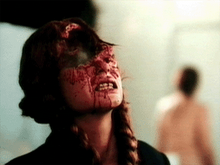
The murders themselves are disturbing and brutal, and these scenes may be rough going for anyone who has a tough time watching sexual violence. I am typically one of those people, but the presentation here never feels like the filmmakers are getting off on it, even when they're meeting the nudity quotas of the era. We mostly see the moments before and the beginnings of these attacks with the rest happening off screen, and the camera is generally in sympathy with the victims or focused on Kirk. These scenes aren't lingered upon, and the movie spends most of its running time on the behaviors of the characters, the detectives' investigation, Dr. Gale's life and work, and the streets and people of Los Angeles. The movie also lets you get to know the victims and their personalities even when they're onscreen for just a brief scene, and they all feel like real, three-dimensional people with lives outside the movie.
The filmmakers get great shots of West Hollywood and the clubs, movie theaters, bars, strip clubs, and porn shops of the era, including Gazzari's (also memorably featured in Cassavetes'
The Killing of a Chinese Bookie, the pilot episode of
The Rockford Files, and
The Decline of Western Civilization Part II: The Metal Years) and the notorious dive bar The Balled Eagle (prominently featured in one of my favorite exploitation movies, 1982's
Vice Squad). I also love the outdoor stairwell entrance to Dr. Gale's free clinic and the clinic's striking paint job, the radio station, and all the seedy porn shops, massage parlors, porn mag offices, and Kirk's rented photography studio.
The movie also gets how important it is to make all the supporting players, bit part actors, and extras as interesting as possible. Most contemporary movies and TV shows turn these roles into bland exposition machines, but this one sure doesn't. Everyone has personality and flavor, with some of my favorites being porn mag publisher Sam Gluckman (Chuck Mitchell, best known as Porky in the
Porky's movies and John Cusack's boss at the burger joint in
Better Off Dead), psychic Von Hammensveld (Chris Wallace), pimp Adkins (Stan Haze), hitchhiker Sue Ellen (Pamela Jean Bryant), model Joyce (Gail Jensen), and the multiple actors and actresses playing drug dealers, sex workers, johns, and street people, every single one of them bringing something to the party.
Director Robert Hammer was a one-and-done filmmaker, with
Don't Answer the Phone! his only feature, but he's lived quite a life. In the military, he worked covert army operations. After leaving the military he worked as a photographer, studied karate under famous martial artist Ed Parker, became interested in filmmaking and shot mostly unreleased documentary footage for Crosby, Stills, Nash & Young and the Steve Miller Band (some of his CSNY footage ended up in a David Crosby doc), decided to make
Don't Answer the Phone! guerilla-style without permits on the streets of Los Angeles, and spent some frustrating years unsuccessfully trying to get another film made before switching gears and becoming a corporate executive in the tech world (come on, man). I believe we all live weird lives because existence itself is weird, but even by those standards, he has a lot of us beat.