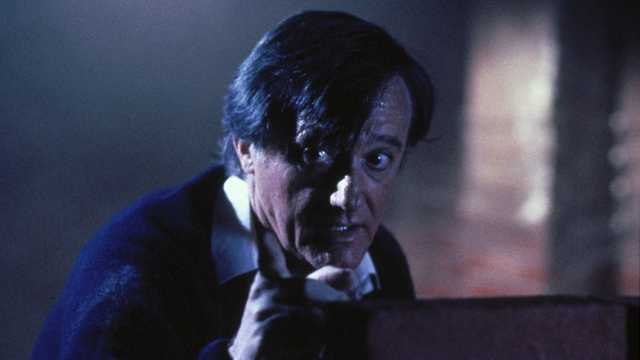
Widely considered the first Mexican horror film (these claims are always hard to prove with so many early films destroyed, deteriorated, or lost, but it's certainly one of the first), La Llorona gives its own spin on the legendary Latin American folk tale of the crying woman, a ghost who steals and drowns children. This particular film replaces drowning with stabbing and neglected wives with scorned mistresses while adding family curses and multiple connected storylines in multiple eras to the mix. It's a fun, creepy, atmospheric, occasionally clunky piece of film history.
Director Ramón Peón was a Cuban filmmaker from Havana, making several silent films in his native country until emigrating to Mexico at the dawn of the 1930s. La Llorona was his first full Mexican production after a Cuban/Mexican co-production, La virgen de la Caridad. For the rest of his long film career, Peón bounced back and forth between Mexico and Cuba, making several films in both countries. He directed his last film in 1963 and retired to Puerto Rico, dying in San Juan in 1971.
La Llorona bears some of the hallmarks of that awkward silent-to-sound transition, with long gaps in the dialogue, some awkwardly paced scenes that lack focus, and limited movement from the actors, problems that wealthier film industries had moved past a year or two earlier, but there are also moments of great visual impact, rich atmosphere, and a fascinating story. It's also great to see Mexican artists telling their own stories when American films from this period (and long after) used white actors in Mexican roles, relegating Mexican and Mexican-American actors to bit parts and comic relief.
La Llorona begins with a man dropping dead on the street after seeing the ghost of a crying woman. His surgeon debates a young intern about whether it was run-of-the-mill cardiac arrest or ghost fear (the doctor is no superstitious fool), and then, for reasons that seem initially baffling but soon make sense, we have a long scene of a child's fourth birthday party. The birthday boy is the son of the skeptical surgeon, who is pulled aside after the party by his father-in-law for some private curse talk in the library. The boy's grandfather/doctor's father-in-law is extremely worried, because his eldest son and older brother both disappeared on their fourth birthdays and were found dead days later from stab wounds to the chest. The doctor seems remarkably unconcerned, so Gramps regales him with a tale from an ancient book about the la llorona curse affecting their family. Cue lengthy flashback scene about the curse's origin. Meanwhile, a creep in a hood and cloak spies on the men from a secret door in the library, a second historical flashback is shown, the doctor becomes worried, and all kinds of crying ghost, child kidnappings, murders, suicides of scorned women, and occult shenanigans occur. The various strands come together in the film's wild conclusion.
The four crying ghosts in the film have an eerie presence, and those scenes are particularly skillful. Peón also does a good job balancing his complicated narrative. It's easy to forgive the film's clunky moments when there is so much to enjoy. If you are interested in '30s horror and Mexican film history, I recommend La Llorona.
Saturday, April 11, 2020
Thursday, April 2, 2020
Buried Alive (Gerard Kikoine, 1989)
My life has been turned upside down since my last post on this site. Like the rest of humanity, I've been dealing with this pandemic, self-isolating except for rare grocery store trips and trying to figure out my day job's hella awkward transition to a work-from-home setup while occasionally checking in on the increasing insanity of the daily news. We have exactly the worst people in charge for a crisis of this magnitude and exactly the worst kind of government. You can imagine the stress I'm feeling when I tell you that the pandemic has been a distant second on my list of personal worries. My wife was dealt a shocking, unexpected major health crisis at the precise moment the pandemic hit the States, and I have been helping her recover from major surgery and prepare for the medical treatments ahead while hoping society manages to stave off collapse and neither of us get exposed to COVID-19 until she's healthy again. Needless to say, if you are a fan or follower or hate-reader of this blog, please bear with me as the posts may be erratic, irregular, or inactive from time to time for the next foreseeable chunk of time.
On a more positive note, my wife and I both find watching movies a great stress reliever in uncertain times, so these posts will continue at their own weird pace as long as her health and mine permit it. In that spirit, let's look at an oddball 1989 horror movie, one of the approximately 15 or 16 horror movies called Buried Alive.
So loosely based on the work of Edgar Allan Poe that it's not really based on Poe at all, Buried Alive was the final film, so far, of French director Gerard Kikoine, who is still alive but hasn't worked in film or television since 1990. Kikoine mostly directed European softcore sex movies, but he ended his film career making a couple of horror movies in the States, Buried Alive and the Anthony Perkins split-personality film Edge of Sanity. Buried Alive stars Robert Vaughn, Donald Pleasence, former Playboy Playmate Karen Lorre (or Karen Witter as she was known then), former porn star Ginger Lynn, John Carradine in his last film role, and Nia Long in her first. It is a weird, weird movie that bounces between inspiration and idiocy and is almost never boring but is frequently incoherent.
Janet (Lorre/Witter) is a beautiful young teacher hired as a science instructor at the Ravenscroft Institute, a home and boarding school for troubled teenage girls (some of whom look to be between the ages of 25 and 40) run by experimental psychologist Gary Julian (Vaughn) and staffed by former mental patients who Julian has cured, including Dr. Schaeffer (Pleasence). Donald Pleasence gets to ham it up spectacularly, wearing a ridiculous hairpiece while speaking in a mock-Sigmund Freud accent, constantly and compulsively eating snack foods, and laughing inappropriately. The teachers and Julian also live at the institute in swank apartments.
Janet is a big fan of Julian's empathetic methods, but Ravenscroft is a weird place, with a labyrinthine, abandoned basement full of disused rooms from when the place was a more traditional, crueler mental institution run by Julian's father Jacob (Carradine). Julian also relentlessly pursues Janet romantically, the teen girls are completely out of control, Janet hears strange sounds and sees hallucinatory images (often involving ants), and girls keep running away from the school, only to disappear. The audience gets to see what happens to them, and it involves the girls falling down secret tunnels into secret rooms where they are buried alive by a freak in a Nixon mask. Oh yeah, almost forgot. A black cat prowls the premises and seems to be able to kill some of the girls with telepathic cat power.
This is not your typical high school experience, and it only gets weirder as the film progresses. Everyone becomes unglued, students, faculty, and staff alike, and disappearances and deaths pile up. Who is burying these girls alive, and why? Is Jacob still alive? What's up with the black cat? What's up with the ant hallucinations? Amazingly, Nia Long is not killed first even though she's one of the only black women in the cast.
Events build up to a fairly conventional reveal, but the closing scenes ramp the weirdness back up. Kikoine is not the greatest visual stylist, and the film is pretty low budget (set in the U.S., it was filmed in South Africa for tax purposes), but the weirdness and interesting cast kept my interest. I don't have much else to say except don't curl your hair with an egg beater (you'll see why).
I hope everyone stays healthy and safe, except for the creeps in charge, and I hope we all get through this with love, perspective, and community. Everyone deserves health care, food, and shelter, and we all have an impact on each other's lives. Don't let any of these fucking ghouls running our various governments tell you otherwise. Let's all start demanding these things and let's never stop.
On a more positive note, my wife and I both find watching movies a great stress reliever in uncertain times, so these posts will continue at their own weird pace as long as her health and mine permit it. In that spirit, let's look at an oddball 1989 horror movie, one of the approximately 15 or 16 horror movies called Buried Alive.
So loosely based on the work of Edgar Allan Poe that it's not really based on Poe at all, Buried Alive was the final film, so far, of French director Gerard Kikoine, who is still alive but hasn't worked in film or television since 1990. Kikoine mostly directed European softcore sex movies, but he ended his film career making a couple of horror movies in the States, Buried Alive and the Anthony Perkins split-personality film Edge of Sanity. Buried Alive stars Robert Vaughn, Donald Pleasence, former Playboy Playmate Karen Lorre (or Karen Witter as she was known then), former porn star Ginger Lynn, John Carradine in his last film role, and Nia Long in her first. It is a weird, weird movie that bounces between inspiration and idiocy and is almost never boring but is frequently incoherent.
Janet (Lorre/Witter) is a beautiful young teacher hired as a science instructor at the Ravenscroft Institute, a home and boarding school for troubled teenage girls (some of whom look to be between the ages of 25 and 40) run by experimental psychologist Gary Julian (Vaughn) and staffed by former mental patients who Julian has cured, including Dr. Schaeffer (Pleasence). Donald Pleasence gets to ham it up spectacularly, wearing a ridiculous hairpiece while speaking in a mock-Sigmund Freud accent, constantly and compulsively eating snack foods, and laughing inappropriately. The teachers and Julian also live at the institute in swank apartments.
Janet is a big fan of Julian's empathetic methods, but Ravenscroft is a weird place, with a labyrinthine, abandoned basement full of disused rooms from when the place was a more traditional, crueler mental institution run by Julian's father Jacob (Carradine). Julian also relentlessly pursues Janet romantically, the teen girls are completely out of control, Janet hears strange sounds and sees hallucinatory images (often involving ants), and girls keep running away from the school, only to disappear. The audience gets to see what happens to them, and it involves the girls falling down secret tunnels into secret rooms where they are buried alive by a freak in a Nixon mask. Oh yeah, almost forgot. A black cat prowls the premises and seems to be able to kill some of the girls with telepathic cat power.
This is not your typical high school experience, and it only gets weirder as the film progresses. Everyone becomes unglued, students, faculty, and staff alike, and disappearances and deaths pile up. Who is burying these girls alive, and why? Is Jacob still alive? What's up with the black cat? What's up with the ant hallucinations? Amazingly, Nia Long is not killed first even though she's one of the only black women in the cast.
Events build up to a fairly conventional reveal, but the closing scenes ramp the weirdness back up. Kikoine is not the greatest visual stylist, and the film is pretty low budget (set in the U.S., it was filmed in South Africa for tax purposes), but the weirdness and interesting cast kept my interest. I don't have much else to say except don't curl your hair with an egg beater (you'll see why).
I hope everyone stays healthy and safe, except for the creeps in charge, and I hope we all get through this with love, perspective, and community. Everyone deserves health care, food, and shelter, and we all have an impact on each other's lives. Don't let any of these fucking ghouls running our various governments tell you otherwise. Let's all start demanding these things and let's never stop.
Subscribe to:
Posts (Atom)